
30 september 2008


Gamma en Microsaccades: beware
Is gamma activity caused by microsaccades ?
That is what Yuval et al think (cfr article in Neuron).
The induced gamma-band EEG response (iGBR) recorded on the scalp is widely assumed to reflect synchronous neural oscillation associated with object representation, attention, memory, and consciousness. The most commonly reported EEG iGBR is a broadband transient increase in power at the gamma range ∼200–300 ms following stimulus onset. A conspicuous feature of this iGBR is the trial-to-trial poststimulus latency variability, which has been insufficiently addressed. Here, we show, using single-trial analysis of concomitant EEG and eye tracking, that this iGBR is tightly time locked to the onset of involuntary miniature eye movements and reflects a saccadic “spike potential.” The time course of the iGBR is related to an increase in the rate of saccades following a period of poststimulus saccadic inhibition. Thus, whereas neuronal gamma-band oscillations were shown conclusively with other methods, the broadband transient iGBR recorded by scalp EEG reflects properties of miniature saccade dynamics rather than neuronal oscillations.
M&M: Music Movies and Emotions
MUSIC Maestro please......
Interesting link for people who care for movies and emotions.
Watch the Scary Mary Poppins if You are in for a Mismatch and see what music can do with your emotions.
"Emotions are bridges that span the void between our expectations and twisted perceptions of reality"
Thanks to Betty for initiating this one.
29 september 2008
Of Mouse and Men
 Now, why is this reminding me of a certain experiment with self stimulating rats, handles and cages ?

From circuits to Neurons and back
 Some interesting books glueing together synapses, math, neurons and circuits.
ESANN 2009
 Join us here.
| Submission of papers | 21 November 2008 |
| Notification of acceptance | 17 January 2009 |
| ESANN conference | 22 - 24 April 2009 |
| Proceedings and journal special issue |
The proceedings will include all communications presented to the conference (tutorials, oral and posters), and will be available on-site.
Extended versions of selected papers will be published in the Neurocomputing journal (Elsevier).
| Location |
The ESANN'2009 conference will be held in Bruges (also called the "Venice of the North"), one of the most beautiful medieval towns in Europe. Bruges can be reached by train from Brussels in less than one hour. The town of Bruges is worldwide known, and famous for its architectural style, its canals, and its pleasant atmosphere.
The conference will be organized in a hotel located near the center (walking distance) of the town. There is no obligation for the participants to stay in this hotel. See "hotels" for details.
Kaos scillatooooo o o o o ooor
Not really neuroscience but well.. nearly as funny.
Thanks Chris for showing this (look at Chris's video and turn your sound system on)

Kaossilator
Thanks Chris for showing this (look at Chris's video and turn your sound system on)
Kaossilator
28 september 2008
Honey, have you seen my eyes ?

For many blind or partially sighted people, implants that stimulate healthy nerve cells connected to their retinas could help restore some normal vision. Researchers have been working on such implants since the 1980s but with only limited success. A major hurdle is making an implant that can stay in the eye for years without declining in performance or causing inflammation.
Read on.....
Most Expensive keyboard in the world
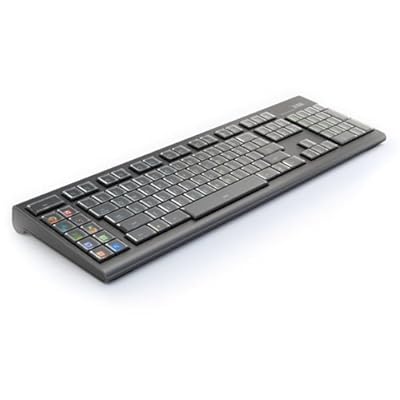 ART LEBEDEV OPTIMUS MAXIMUS KEYBOARD 113 OLEDS - BLACK
Each key is a little screen that can display images , video etc..
Nice for Neurophysiological millionaires : a key for ongoing P50, sleep EEG, ...
Dream on....
ART LEBEDEV OPTIMUS MAXIMUS KEYBOARD 113 OLEDS - BLACK
Each key is a little screen that can display images , video etc..
Nice for Neurophysiological millionaires : a key for ongoing P50, sleep EEG, ...
Dream on....
Chaos in Crete
 An interesting conference with entries on neurophysiolgy and biosignals.
Read the proceedings abstracts and papers of the 2008 conference here
An interesting conference with entries on neurophysiolgy and biosignals.
Read the proceedings abstracts and papers of the 2008 conference here
27 september 2008

24 september 2008
Mission in Time Space


Coming soon in a Second Life movie theatre in a galaxy not far from Yours..
Nature Video is proud to present five short films, on the future of physics. The films comprise conversations with Nobel Prize winning physicists George Smoot, David Gross, Gerardus ‘t Hooft, John Hall and William Phillips, covering dark matter, dark energy, the Large Hadron Collider, space-time and quantum computing. Recorded at the 2008 Nobel Laureate Meeting in Lindau, students willingly don the role of interviewers and make the most of this one off question time! Two of the five films will be premiered at a special screening in Second Life and you are cordially invited to attend. The screening will take place on 2 October 2008 at 10am PST, 1pm EST and 6pm London time. RSVP is required, please email us at Missions in Space-Time. Instructions are available on how to create an account in Second Life here. Subsequently, each of the five films will be serialized, each week, on iTunes and nature.com starting with the first on 3 October 2008.
19 september 2008

SSVEP: Steady State VEP's in BCI


 The RIKEN way of BCI. It allows a very large scale of commands to be transmitted and decoded extending the BCI functionality.
read it here....
The RIKEN way of BCI. It allows a very large scale of commands to be transmitted and decoded extending the BCI functionality.
read it here....
Information Flow in the Brain
 EEG activity propagation after finger movement in alpha (above) and beta (below) bands
The movie shows the dynamics of transmissions during voluntary finger movement experiment [4]. The time scale covers period from 5 seconds before the movement to 3 seconds after the movement. The beta decrease and the surround effect are visible.
EEG activity propagation after finger movement in alpha (above) and beta (below) bands
The movie shows the dynamics of transmissions during voluntary finger movement experiment [4]. The time scale covers period from 5 seconds before the movement to 3 seconds after the movement. The beta decrease and the surround effect are visible.
Direct Transfert Function: DTF Tutorial

Estimating the progression of flow of information in the human brain by analysing the multivariate signals from multiple simulaneous time series from often high density EEG channels is no trivial task. However it is very important that we do not fall asleep on this one. By following this tutorial, chances are You will stay awake and let the new information be the source of an activating learning experience. After all, that's what are brains are for.
German Neuroscience Portal
 The global scale of neuroinformatics offers unprecedented opportunities for scientific collaborations between and among experimental and theoretical neuroscientists. To fully harvest these possibilities, coordinated activities are required to improve key ingredients of neuroscience: data access, data storage, and data analysis, together with supporting activities for teaching and training. There is a statement paper in pdf (cfr read on)
read on........
The global scale of neuroinformatics offers unprecedented opportunities for scientific collaborations between and among experimental and theoretical neuroscientists. To fully harvest these possibilities, coordinated activities are required to improve key ingredients of neuroscience: data access, data storage, and data analysis, together with supporting activities for teaching and training. There is a statement paper in pdf (cfr read on)
read on........
EEG.pl

Blue Brain

The Blue Brain Project
Henry Markram1*
1 Brain Mind Institute, Ecole Polytechnique Fédérale de Lausanne, Switzerland
Simulation-based research has become possible and has replaced experiments in several sciences when critical mass is reached in experimental data and computing power. In life science in general, and in neuroscience in particular, both data and computing requirements are however extreme. The Blue Brain Project is pioneering a strategy to build a facility that can absorb biological data and drive the computing needs that would support simulation-based research for brain research. The first challenge in the project was to database, reconstruct, simulate, visualize and analyze a neocortical column of a 2 week old somatosensory rat cortex at cellular level precision. The facility now allows the building of the neocortical column (and any detailed neural models) according to biological specifications and is designed to allow continual refinement of the biological accuracy. The process of building the model column has exposed fundamental principles of circuit design and operation that were not known before and the models can be used to replicate experiments and explore in silico far beyond the technological limitations imposed on experiments in order to make predictions for future experiments. The next phase of the project aims to allow biological refinement down to the molecular level and to expand the facility to allow whole-brain simulation-based research. The rapid increase in computational power and increased volume and quality of data representations of biological processes will allow progressively deeper exploration of the complexity of the brain and more detailed hypothesis testing. We conclude that simulation-based research is a viable new approach to understanding the structure, function and dysfunctions of the brain.
Put some ART in WEKA


EEG visualisation
 Visualisation of multichannel EEG data
is no trivial task. One tries to maximize the information gain obtained from multichannel time series without cluttering the screen with useless details. A nice trial can and some clear ideas can be found here.
A typical data-driven visualization of electroencephalography (EEG) coherence is a graph layout, with vertices representing electrodes and edges representing significant coherences between electrode signals. A drawback of this layout is its visual clutter for multichannel EEG. To reduce clutter, we introduce the concept of functional unit (FU) as a data-driven region of interest (ROI). An FU is a spatially connected set of electrodes recording pairwise significantly coherent signals, represented in the coherence graph by a spatially connected clique. To detect FUs, we developed a maximal clique based method, which is very time consuming, and a much more efficient watershed-based greedy method, thus making interactive visualization of multichannel EEG coherence possible.
An example is shown in the figure below. Brain responses were collected from three subjects using an EEG cap with 119 scalp electrodes. During a so-called P300 experiment, each participant was instructed to count and report the number of (rare) target tones of 2000 Hz, alternated with standard tones of 1000 Hz which were to be ignored. To each electrode a cell is associated and all cells belonging to an FU have a corresponding color. Lines connect FU centers if the inter-FU coherence exceeds a significance threshold. The color of a line depends on the inter-FU coherence. Shown are FU maps for target stimuli data, with FUs larger than 5 cells, for the 1-3Hz EEG frequency band (top row) and for 13-20Hz (bottom row), for three datasets.
Read on
Visualisation of multichannel EEG data
is no trivial task. One tries to maximize the information gain obtained from multichannel time series without cluttering the screen with useless details. A nice trial can and some clear ideas can be found here.
A typical data-driven visualization of electroencephalography (EEG) coherence is a graph layout, with vertices representing electrodes and edges representing significant coherences between electrode signals. A drawback of this layout is its visual clutter for multichannel EEG. To reduce clutter, we introduce the concept of functional unit (FU) as a data-driven region of interest (ROI). An FU is a spatially connected set of electrodes recording pairwise significantly coherent signals, represented in the coherence graph by a spatially connected clique. To detect FUs, we developed a maximal clique based method, which is very time consuming, and a much more efficient watershed-based greedy method, thus making interactive visualization of multichannel EEG coherence possible.
An example is shown in the figure below. Brain responses were collected from three subjects using an EEG cap with 119 scalp electrodes. During a so-called P300 experiment, each participant was instructed to count and report the number of (rare) target tones of 2000 Hz, alternated with standard tones of 1000 Hz which were to be ignored. To each electrode a cell is associated and all cells belonging to an FU have a corresponding color. Lines connect FU centers if the inter-FU coherence exceeds a significance threshold. The color of a line depends on the inter-FU coherence. Shown are FU maps for target stimuli data, with FUs larger than 5 cells, for the 1-3Hz EEG frequency band (top row) and for 13-20Hz (bottom row), for three datasets.
Read on


Blue Brain : sheds gamma light..

When Fermion meets Boson

Just when we thought that clinical neurophysiology and neurosciences were complicated, this theory: "Supersymmetry" hits the Blog.
Hopefully, the people in Geneva will soon be able to restart their Collider toy (LHC) (has been stopped for technical reasons) and show us the existence of these particles related to breaking of supersymmetry, a phenomenon that for the moment can only be understood from complicated grid calculations and models.
read more .....
When Fermion meets Boson
Just when we thought that neurophysiology was complicated this message hit the blog. Supersymmetry ! Hopefully will be demonstrated at geneva when they succeed in restarting their LHC (has stopped recently).
fascinating theory.
18 september 2008
Hope for PTSD
Formation and extinction of aversive memories in the mammalian brain
are insufficiently understood at the cellular and molecular levels.
Using the novel metabotropic glutamate receptor 7 (mGluR7) agonist
AMN082, we demonstrate that mGluR7 activation facilitates the
extinction of aversive memories in two different amygdala-dependent
tasks. Conversely, mGluR7 knockdown using short interfering RNA
attenuated the extinction of learned aversion. mGluR7 activation also
blocked the acquisition of Pavlovian fear learning and its
electrophysiological correlate long-term potentiation in the amygdala.
The finding that mGluR7 critically regulates extinction, in addition to
acquisition of aversive memories, demonstrates that this receptor may
be relevant for the manifestation and treatment of anxiety disorders.
Read here
Read here
17 september 2008
BCI: Road into the future

Brain-computer interface (BCI) research deals with establishing communication pathways between the brain and external devices where such pathways do not otherwise exist. Throughout the world, such research is surprisingly extensive and expanding. BCI research is rapidly approaching a level of first-generation medical practice for use by individuals whose neural pathways are damaged, and use of BCI technologies is accelerating rapidly in nonmedical arenas of commerce as well, particularly in the gaming, automotive, and robotics industries. The technologies used for BCI purposes are cutting-edge, enabling, and synergistic in many interrelated arenas, including signal processing, neural tissue engineering, multiscale modeling, systems integration, and robotics.
This WTEC study gathered information on worldwide status and trends in BCI research to disseminate to government decisionmakers and the research community. The study reviewed and assessed the state of the art in sensor technology, the biotic-abiotic interface and biocompatibility, data analysis and modeling, hardware implementation, systems engineering, functional electrical stimulation, noninvasive communication systems, and cognitive and emotional neuroprostheses in academic research and industry. The study also compared the distinctly different foci, range, and investment levels of BCI research programs in the United States, Canada, China, Europe, and Japan.
read more
12 september 2008


11 september 2008
10 september 2008


LHC
It may not be neuroscience but as one of the most scientific images of our (and future) times this little spider deserves a mention in this as well as all other blogs all over the world.
Enter the magnificent realm of the Large Hadron Collider (on your own hazard).
08 september 2008
Neuronal Music
 Not what You would call a celestial symphonical masterpiece but still very interesting.
Computer-generated music based on electrical recordings of brain activity during wakefulness or sleep. Those are taken from multiunit recordings of 8 neurons in cerebral cortex (Destexhe et al., J Neurosci, 1999). A given neuron was associated to a fixed tone, and every time this neuron fires, a note is emitted. The "melody" produced gives an idea about the distributed firing activity of those neurons..
Not what You would call a celestial symphonical masterpiece but still very interesting.
Computer-generated music based on electrical recordings of brain activity during wakefulness or sleep. Those are taken from multiunit recordings of 8 neurons in cerebral cortex (Destexhe et al., J Neurosci, 1999). A given neuron was associated to a fixed tone, and every time this neuron fires, a note is emitted. The "melody" produced gives an idea about the distributed firing activity of those neurons..
07 september 2008
EEG hardware not expensive
 Get it in the PRC. 24-32 ch. 2400 USD. Laptop not included. It does not come cheaper then that (or does it..?)


06 september 2008


Brain Topography

04 september 2008

Loreta on a Mac ?
It is possible but:
read what a commentator said about it.
The virtual window systems that allow you to run Windows XP etc in a window on a Mac tend to use only one CPU or processor at a time. They also impose some significant additional penalties on access to memory, filesystems, etc.
If you want to run Windows on systems ordinarily running OS/X, then you should consider setting up Apple's BootCamp (free software) that allows you to choose to run either OS/X or Windows (but not both at the same time) whenever you boot your machine - providing full access to CPUs / processors, memory, filesystems, etc - without any virtualization for the best possible performance.
On the other hand, if you want to use Mac specific tools while running LORETA you might consider using Parallels or VMware - though your raw compute power will suffer - and you may need more memory if your application is memory intensive - as are most 3D volume imaging packages.
03 september 2008
Take a note: use a.nnotate 4 Teamwork

As a research team we often have lots of metings to organise and lots of documents to supervise. One often uses mailists and streams of emails but things can easily get cloggeed in time and obscured as far as versions and supplementary corrections or annotations are added by different parties.
That is where a website/service as A.nnotate can come in handy.
Try it ( and it gives You a free pdf converter).
Neurotraces

An interesting website dedicated to neurophysiology (as we like them). Lot's og good technical stuff (Scilab based) and practical tutorials.
Congratulations !


Abonneren op:
Posts (Atom)