31 maart 2009


30 maart 2009
Electrophysiology of the Neuron
 Neurons are fascinating study objects. The tools to explore this just came in real cheap.
Electrophysiology of the Neuron" is an interactive tutorial that comes with a computer disk for simulation of single neurons on a Macintosh or IBM-PC compatible computer. It was available from Oxford University Press ISBN # 0-19-509167-1 (mac) and 0-19- 509111-6 (PC), and is now out of print. It was designed to be an adjunct to Neurobiology, 3rd edition by Gordon Shepherd, but can also be used as a stand alone text.
29 maart 2009

26 maart 2009
Zap the Evil PTSD memory
 Some years ago Your servant twisted his brain and came up with a scheme to lessen the strength of associative clues to PTSD provoking memory traces. This complex procedure consisted of collecting specific knowledge about the patients PTSD problem, checking out stress levels induced by different associative links by using HRV and GSR measurements and then switching to ERP measurements of specific visual (or auditive) stimuli to find when (and where using Loreta) the sources of the culprit networks would be. The general idea was that when one evokes memories (images, feelings) these memory traces are recalled from their stores and temporarily vulnerable to interfering interventions (fi rTMS) on the re encoding phase of the recall process. Literature in nature Neurosciences had shown this sequence to happen in order of 100-200 msec. Timed by the ERP sources a fast neuronavigated rTMS could zap it at that stage erasing it or probably lessen the associative strenght wich could the be measured (we do EBM over here) by reasseessing the HRV and GSR to cues again. Nice and elegant ?
Although the idea looked worth pursuing (in the eye of the beholder) as it would allow specific personalized therapy it was also clear that this would be complex, involving lots of time and resources and would probably be way to costly to be used on a large base. When it became clear that propanolol also weakens the re encoding it the plan became again put on the drawing table.
However the solution these authors came up with (in mice) is much better and way more elegant !!
A very readable description of the whole strategy whereby CREB expressing neurons (learning neurons) are selectively botoxed out is found in this blog: NEUROTOPIA . A must read.
Some years ago Your servant twisted his brain and came up with a scheme to lessen the strength of associative clues to PTSD provoking memory traces. This complex procedure consisted of collecting specific knowledge about the patients PTSD problem, checking out stress levels induced by different associative links by using HRV and GSR measurements and then switching to ERP measurements of specific visual (or auditive) stimuli to find when (and where using Loreta) the sources of the culprit networks would be. The general idea was that when one evokes memories (images, feelings) these memory traces are recalled from their stores and temporarily vulnerable to interfering interventions (fi rTMS) on the re encoding phase of the recall process. Literature in nature Neurosciences had shown this sequence to happen in order of 100-200 msec. Timed by the ERP sources a fast neuronavigated rTMS could zap it at that stage erasing it or probably lessen the associative strenght wich could the be measured (we do EBM over here) by reasseessing the HRV and GSR to cues again. Nice and elegant ?
Although the idea looked worth pursuing (in the eye of the beholder) as it would allow specific personalized therapy it was also clear that this would be complex, involving lots of time and resources and would probably be way to costly to be used on a large base. When it became clear that propanolol also weakens the re encoding it the plan became again put on the drawing table.
However the solution these authors came up with (in mice) is much better and way more elegant !!
A very readable description of the whole strategy whereby CREB expressing neurons (learning neurons) are selectively botoxed out is found in this blog: NEUROTOPIA . A must read.
 Science 13 March 2009:
Vol. 323. no. 5920, pp. 1492 - 1496
DOI: 10.1126/science.1164139
Reports
Selective Erasure of a Fear Memory
Jin-Hee Han,1,2,3 Steven A. Kushner,1,4 Adelaide P. Yiu,1,2 Hwa-Lin (Liz) Hsiang,1,2 Thorsten Buch,5 Ari Waisman,6 Bruno Bontempi,7 Rachael L. Neve,8 Paul W. Frankland,1,2,3 Sheena A. Josselyn1,2,3*
Memories are thought to be encoded by sparsely distributed groups of neurons. However, identifying the precise neurons supporting a given memory (the memory trace) has been a long-standing challenge. We have shown previously that lateral amygdala (LA) neurons with increased cyclic adenosine monophosphate response element–binding protein (CREB) are preferentially activated by fear memory expression, which suggests that they are selectively recruited into the memory trace. We used an inducible diphtheria-toxin strategy to specifically ablate these neurons. Selectively deleting neurons overexpressing CREB (but not a similar portion of random LA neurons) after learning blocked expression of that fear memory. The resulting memory loss was robust and persistent, which suggests that the memory was permanently erased. These results establish a causal link between a specific neuronal subpopulation and memory expression, thereby identifying critical neurons within the memory trace.
Science 13 March 2009:
Vol. 323. no. 5920, pp. 1492 - 1496
DOI: 10.1126/science.1164139
Reports
Selective Erasure of a Fear Memory
Jin-Hee Han,1,2,3 Steven A. Kushner,1,4 Adelaide P. Yiu,1,2 Hwa-Lin (Liz) Hsiang,1,2 Thorsten Buch,5 Ari Waisman,6 Bruno Bontempi,7 Rachael L. Neve,8 Paul W. Frankland,1,2,3 Sheena A. Josselyn1,2,3*
Memories are thought to be encoded by sparsely distributed groups of neurons. However, identifying the precise neurons supporting a given memory (the memory trace) has been a long-standing challenge. We have shown previously that lateral amygdala (LA) neurons with increased cyclic adenosine monophosphate response element–binding protein (CREB) are preferentially activated by fear memory expression, which suggests that they are selectively recruited into the memory trace. We used an inducible diphtheria-toxin strategy to specifically ablate these neurons. Selectively deleting neurons overexpressing CREB (but not a similar portion of random LA neurons) after learning blocked expression of that fear memory. The resulting memory loss was robust and persistent, which suggests that the memory was permanently erased. These results establish a causal link between a specific neuronal subpopulation and memory expression, thereby identifying critical neurons within the memory trace.
25 maart 2009


22 maart 2009
To program a Shaky robot
 programming a shaky robot can be great fun but also provide great insights into the working of human brain motor systems. That is what the people at Riken were trying to do although I am sure they really had fun and enjoyed doing this.
read the detailed article here at PLOS .....
Programmers of robots have long been challenged by the difficulty of implementing some of the simplest of human activities, such as walking up stairs or digging a ditch. This is partially due to the versatility of human motor behavior in varying situations. Such robustness can be achieved with a functional hierarchy: a division of labor that allows complex motor behaviors to arise from simpler tasks that are connected at a higher level.
Previously, researchers had theorized that a connection of reusable sub-movements called motor primitives would be represented by spatially localized networks in the brain. Now, Yuichi Yamashita and Jun Tani from the RIKEN Brain Science Institute, Wako, have shown that the temporal characteristics of neurons in these motor networks may be just as critical to their functional hierarchy1.
Yamashita and Tani took a synthetic approach to test their hypothesis that multiple timescales of activity could mediate motor organization. To this end, the scientists trained a robot to complete a set of distinct, but related, tasks. These motor behaviors included picking up a block to shake it side to side (Fig. 1), picking up a block to shake it up and down, and touching the top of a block with one hand.
“It is generally thought that diverse behavior of an animal results from a functional hierarchy of the motor-control system,” explains Yamashita, where “motor primitives are flexibly integrated.” For example, the robot’s tasks could be executed by mixing and matching such primitives as making contact with an object, lifting it, and shaking it.
The key distinction in Yamashita and Tani’s work was that the hierarchical organization arose from multiple timescales in the network activity, rather than through spatial connections. The spatially based networks of previous studies consisted of isolated modules responding to each primitive in the lower levels, and gates to select and switch between primitives in the higher levels.
By contrast, the neural network of Yamashita and Tani’s robot comprised fast units, which could respond quickly to changing inputs, and slow units, which tended to avoid rapid fluctuations by relying on previous states. Based on the network activity, it appeared that the fast units had spontaneously organized to represent motor primitives, whereas the slow units resembled gates that ordered and activated the primitives. This discovery helps to explain the puzzling discrepancy between previous theories of spatially based motor organization and the elusive evidence of such spatial organization in the animal brain.
programming a shaky robot can be great fun but also provide great insights into the working of human brain motor systems. That is what the people at Riken were trying to do although I am sure they really had fun and enjoyed doing this.
read the detailed article here at PLOS .....
Programmers of robots have long been challenged by the difficulty of implementing some of the simplest of human activities, such as walking up stairs or digging a ditch. This is partially due to the versatility of human motor behavior in varying situations. Such robustness can be achieved with a functional hierarchy: a division of labor that allows complex motor behaviors to arise from simpler tasks that are connected at a higher level.
Previously, researchers had theorized that a connection of reusable sub-movements called motor primitives would be represented by spatially localized networks in the brain. Now, Yuichi Yamashita and Jun Tani from the RIKEN Brain Science Institute, Wako, have shown that the temporal characteristics of neurons in these motor networks may be just as critical to their functional hierarchy1.
Yamashita and Tani took a synthetic approach to test their hypothesis that multiple timescales of activity could mediate motor organization. To this end, the scientists trained a robot to complete a set of distinct, but related, tasks. These motor behaviors included picking up a block to shake it side to side (Fig. 1), picking up a block to shake it up and down, and touching the top of a block with one hand.
“It is generally thought that diverse behavior of an animal results from a functional hierarchy of the motor-control system,” explains Yamashita, where “motor primitives are flexibly integrated.” For example, the robot’s tasks could be executed by mixing and matching such primitives as making contact with an object, lifting it, and shaking it.
The key distinction in Yamashita and Tani’s work was that the hierarchical organization arose from multiple timescales in the network activity, rather than through spatial connections. The spatially based networks of previous studies consisted of isolated modules responding to each primitive in the lower levels, and gates to select and switch between primitives in the higher levels.
By contrast, the neural network of Yamashita and Tani’s robot comprised fast units, which could respond quickly to changing inputs, and slow units, which tended to avoid rapid fluctuations by relying on previous states. Based on the network activity, it appeared that the fast units had spontaneously organized to represent motor primitives, whereas the slow units resembled gates that ordered and activated the primitives. This discovery helps to explain the puzzling discrepancy between previous theories of spatially based motor organization and the elusive evidence of such spatial organization in the animal brain.
20 maart 2009

19 maart 2009


18 maart 2009
What could make Lisa happy ?
 The complete answer can be found on Cognitive daily (a must visit Blog by Greta and Dave Munger)
Hint: the answer is (not) just around the corner.
The complete answer can be found on Cognitive daily (a must visit Blog by Greta and Dave Munger)
Hint: the answer is (not) just around the corner.
About Docters Young and Old: Decisions and Drones

17 maart 2009


N1 P2 again
| | ||||||||||||||||||||||||||||||||||||||||||||||||||||||||||||||
Reductions in the N1 and P2 Auditory Event-Related Potentials in First-Hospitalized and Chronic Schizophrenia
1 To whom correspondence should be addressed; Cognitive Neuroscience Laboratory, McLean Hospital, 115 Mill Street NBG21, Belmont, MA 02478; tel: 617-855-3786, fax: 617-855-3795, e-mail: dean_salisbury@hms.harvard.edu.
The N1 auditory event-related potential (ERP) is reduced in chronic schizophrenia, as is the P2 to attended tones. N1 reduction may be endophenotypic for schizophrenia, being reduced in twins of schizophrenic patients and showing heritability. Results in family members, however, are equivocal, with abnormally small N1 (consistent with an endophenotype) and abnormally large N1 (inconsistent with an endophenotype) reported. P2 has been little studied in schizophrenia or family members. One crucial step in establishing endophenotypes is to rule out causal chronicity factors. We examined schizophrenia patients within 1 year of first hospitalization (most within 2 wk), chronically ill patients, and matched controls to examine N1 and P2 reductions and disease stage. Two active target detection oddball tasks were used, one with 97-dB tones against 70-dB white masking noise, the second with 97-dB tones without noise. Results from 8 samples are reported: first-hospitalized patients and matched controls and chronic patients and matched controls for the 2 tasks. N1 and P2 were measured from the standard stimuli. N1 and P2 were significantly reduced in chronic patients, as expected, and reduced in first-hospitalized patients. Because N1 and P2 are reduced even at the first hospitalization for schizophrenia, they may serve as viable electrophysiological endophenotypes for the disorder. However, deficit early in the disease is necessary but not sufficient to establish these ERPs as endophenotypes. Deficits must next be demonstrated in at least a subset of unaffected family members, a crucial criterion for an endophenotype.
Keywords: schizophrenia / first episode / event-related potential / endophenotype / N1 / N100 / P2 / P200

N1 P2 again
| | ||||||||||||||||||||||||||||||||||||||||||||||||||||||||||||||
Reductions in the N1 and P2 Auditory Event-Related Potentials in First-Hospitalized and Chronic Schizophrenia
1 To whom correspondence should be addressed; Cognitive Neuroscience Laboratory, McLean Hospital, 115 Mill Street NBG21, Belmont, MA 02478; tel: 617-855-3786, fax: 617-855-3795, e-mail: dean_salisbury@hms.harvard.edu.
The N1 auditory event-related potential (ERP) is reduced in chronic schizophrenia, as is the P2 to attended tones. N1 reduction may be endophenotypic for schizophrenia, being reduced in twins of schizophrenic patients and showing heritability. Results in family members, however, are equivocal, with abnormally small N1 (consistent with an endophenotype) and abnormally large N1 (inconsistent with an endophenotype) reported. P2 has been little studied in schizophrenia or family members. One crucial step in establishing endophenotypes is to rule out causal chronicity factors. We examined schizophrenia patients within 1 year of first hospitalization (most within 2 wk), chronically ill patients, and matched controls to examine N1 and P2 reductions and disease stage. Two active target detection oddball tasks were used, one with 97-dB tones against 70-dB white masking noise, the second with 97-dB tones without noise. Results from 8 samples are reported: first-hospitalized patients and matched controls and chronic patients and matched controls for the 2 tasks. N1 and P2 were measured from the standard stimuli. N1 and P2 were significantly reduced in chronic patients, as expected, and reduced in first-hospitalized patients. Because N1 and P2 are reduced even at the first hospitalization for schizophrenia, they may serve as viable electrophysiological endophenotypes for the disorder. However, deficit early in the disease is necessary but not sufficient to establish these ERPs as endophenotypes. Deficits must next be demonstrated in at least a subset of unaffected family members, a crucial criterion for an endophenotype.
Keywords: schizophrenia / first episode / event-related potential / endophenotype / N1 / N100 / P2 / P200
mediotemporal theta
 Image that mediotemporal theta indicates a brain state in wich remembering will be succesfull. it works as a predictor for succesfull recall. It was done with magnetoEEG but qEEG high density should also do the trick.
fascinating... my dear dr Spock. It is indeed between Your ears.
Image that mediotemporal theta indicates a brain state in wich remembering will be succesfull. it works as a predictor for succesfull recall. It was done with magnetoEEG but qEEG high density should also do the trick.
fascinating... my dear dr Spock. It is indeed between Your ears.
Citation: "Medial temporal theta state before an event predicts episodic encoding success in humans." By Sebastian Guderian, Bjorn H. Schott, Alan Richardson-Klavehn and Emrah Duzel. Proceedings of the National Academy of Sciences, Vol. 106, No. 11, March 16, 2009.
16 maart 2009


Brainbuilders Inc
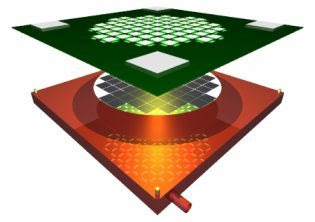
 These people are building tomorrows (European) brain. There seems to be a large scale endeavor on this as also DARPA and the China Brain project (Hugo de garis) are competing on this track.
Neuronavigated rTMS

A Randomized Trial of rTMS Targeted with MRI Based Neuro-Navigation in Treatment-Resistant Depression
Paul B Fitzgerald1, Kate Hoy1, Susan McQueen1, Jerome J Maller1, Sally Herring1, Rebecca Segrave1, Michael Bailey2, Greg Been1, Jayashri Kulkarni1 and Zafiris J Daskalakis3
- 1Alfred Psychiatry Research Centre, The Alfred and Monash University School of Psychology, Psychiatry and Psychological Medicine, Commercial Rd Melbourne, Victoria, Australia
- 2Monash University Department of Epidemiology and Preventive Medicine, The Alfred Hospital, Commercial Rd Melbourne, Victoria, Australia
- 3Centre for Addiction and Mental Health, University of Toronto, Toronto, Ontario, Canada
Correspondence: Professor PB Fitzgerald, Alfred Psychiatry Research Centre, First Floor, Old Baker Building, The Alfred, Commercial Rd Melbourne, Victoria 3004, Australia. Tel: +61 3 9076 6552; Fax: +61 3 9076 6588; E-mail: paul.fitzgerald@med.monash.edu.au
Received 8 August 2008; Revised 14 December 2008; Accepted 16 December 2008; Published online 14 January 2009.
Abstract
The aim of this study is to investigate whether repetitive transcranial magnetic stimulation (rTMS) targeted to a specific site in the dorsolateral prefrontal cortex (DLPFC), with a neuro-navigational method based on structural MRI, would be more effective than rTMS applied using the standard localization technique. Fifty-one patients with treatment-resistant depression were randomized to receive a 3-week course (with a potential 1-week extension) of high-frequency (10 Hz) left-sided rTMS. Thirty trains (5 s duration) were applied daily 5 days per week at 100% of the resting motor threshold. Treatment was targeted with either the standard 5 cm technique (n=27) or using a neuro-navigational approach (n=24). This involved localizing the scalp location that corresponds to a specific site at the junction of Brodmann areas 46 and 9 in the DLPFC based on each individual subject's MRI scan. There was an overall significant reduction in the Montgomery–Asberg Depression Rating Scale scores over the course of the trial, and a better outcome in the targeted group compared with the standard localization group at 4 weeks (p=0.02). Significant differences were also found on secondary outcome variables. The use of neuro-navigational methods to target a specific DLPFC site appears to enhance response to rTMS treatment in depression. Further research is required to confirm this in larger samples, or to establish whether an alternate method based on surface anatomy, including measurement from motor cortex, can be substituted for the standard 5 cm method.
Keywords:
repetitive transcranial magnetic stimulation, depression, prefrontal cortex, respons
The challenge !! Remember ?
 The challenge: Break the code.
The cues and hints:
The challenge: Break the code.
The cues and hints:
Clue 1: The code is read from left to right, beginning with the upper leftmost corner.
Clue 2: Colors from similar spectral families are considered to be the same (example: pink is equal to red)
Clue 3: It is a triplet code
Clue 4: The only spectral families that code (alone or in combination) for actual letters are yellow, green and red.
Clue 5: The dots on the bottom line of MicroArray code for blanks.
Clue 6: The answer is a statement having six words and the following letters are not used: J, K, L, M, P, Q, R, U, V, X, Y, Z.
Clue 7: In the triplet code, three adjacent dots code for each letter, which should be placed at the site of the center dot. Words are created from abutting triplet-coded letters. The code for the letter 'e' is 'yellow green green' and the code for the letter 'n' is 'green red green'.
The solution: read here
The winners: -->
14 maart 2009


Audiocubes

 First we had Ice cubes, then light cubes but now there the amazing audio cubes. Check this out ! It can awake the "Regi" in you.
Pi day

 14 th march 2009: rearrange as 3/14/09 this is .... YEP !!! 3,1409.... Pi !!!
Celebrate Pi day.
You can only eat PI -za or PI - ta but You are allowed to add some Pi-ments. Pi can help You to become a become math Pi-onnier or a Pi-lot... so keep going....
PS You know when is Eulers "e" day ?
Answer:
(the day after D day)
sorry.........bad joke !! Pi-ty this.
14 th march 2009: rearrange as 3/14/09 this is .... YEP !!! 3,1409.... Pi !!!
Celebrate Pi day.
You can only eat PI -za or PI - ta but You are allowed to add some Pi-ments. Pi can help You to become a become math Pi-onnier or a Pi-lot... so keep going....
PS You know when is Eulers "e" day ?
Answer:
(the day after D day)
sorry.........bad joke !! Pi-ty this.
Friston Website

 A very interesting website stuffed with lots on interesting presentations and articles.
Big Kudo's to Dr. Luc R. for signaling this one.
A very interesting website stuffed with lots on interesting presentations and articles.
Big Kudo's to Dr. Luc R. for signaling this one.

13 maart 2009
Walk my World
 A new VR device creates complete freedom of movement in any VR world. Ideal for rehab and exploring strange new worlds and boldly go where no man has gone before....

12 maart 2009

Voyage through knowledge space
 Amazing......strange. Courtesy to SEED magazine. Visit the new SEED website.
A video not to be missed (slideshow and comments)
Amazing......strange. Courtesy to SEED magazine. Visit the new SEED website.
A video not to be missed (slideshow and comments)

11 maart 2009
Was Kloos correct ?


IK BEN EEN GOD
Ik ben een God in 't diepst van mijn gedachten, En zit in 't binnenst van mijn ziel ten troon Over mij zelf en 't al, naar rijksgeboôn Van eigen strijd en zege, uit eigen krachten. Now take an MRI machine, a set of believers versus non-believers and 60 questions to see where in the brain Kloos was alluding on. Not so clear cut as the poet might have thought... D. Kapogiannis, A. K. Barbey, M. Su, G. Zamboni, F. Krueger, J. Grafman (2009). Cognitive and neural foundations of religious belief Proceedings of the National Academy of Sciences DOI: 10.1073/pnas.0811717106
10 maart 2009

fast.. Faster....
 Celoxia FPGA accelerator cards. High speed... Low price. That is what BCI needs !!
ABC: A Brain China
09 maart 2009

Amyloid 42 fibrils
 6 March 2009. The Aβ42 peptide may self-aggregate to form fibers with a structure profoundly different from those made of its less pathogenic cousin Aβ40. So suggests a cryoelectron microscopy (cryoEM) study—the first reported for Aβ1-42—in this week’s PNAS Early Edition. In contrast to structural studies of Aβ1-40 that have predicted a tight arrangement of protofilaments in mature fibers, the new model describes Aβ1-42 fibers as pairs of loosely connected protofilaments snaked around a hollow core. “There might be a weak link in this seemingly impenetrable molecule,” said neurologist Jin-Moo Lee of Washington University School of Medicine, St. Louis, Missouri, who led the new research. If fibrillar Aβ42 “is in fact a toxic species, then this is a potential site where we might disrupt the fibril,” Lee said. The authors and other scientists caution, though, that differences in growth conditions for the various Aβ species make it hard to directly compare structural studies of Aβ1-40 and Aβ1-42. The relevance of synthetic Aβ fibril structures—the kind used here—to Alzheimer disease also remains to be seen.
08 maart 2009


Depression and escitalopram
 An article the lancet with study objective and architecture from Cochrane foundation.
Clearly in favor of escitalopram. The recurrent story that S enantiomers of citalopram are only a marketing trick (conspiration theory) are clearly proven false mémé's both in basic research and clinical studies.
escitalopram (the S enantiomer) is 30 times more potent then R citalopram that hunders the effect of the S enantiomer at the serotonine reuptake receptor. beste quality and less side effects for our patients are better provided by the S enantiomer (escitalopram). This is the way to go in a condition suc as depression that needs the best of treatments.
An article the lancet with study objective and architecture from Cochrane foundation.
Clearly in favor of escitalopram. The recurrent story that S enantiomers of citalopram are only a marketing trick (conspiration theory) are clearly proven false mémé's both in basic research and clinical studies.
escitalopram (the S enantiomer) is 30 times more potent then R citalopram that hunders the effect of the S enantiomer at the serotonine reuptake receptor. beste quality and less side effects for our patients are better provided by the S enantiomer (escitalopram). This is the way to go in a condition suc as depression that needs the best of treatments.
 Cite or Link Using DOI
Comparative efficacy and acceptability of 12 new-generation antidepressants: a multiple-treatments meta-analysis

 ,
,